


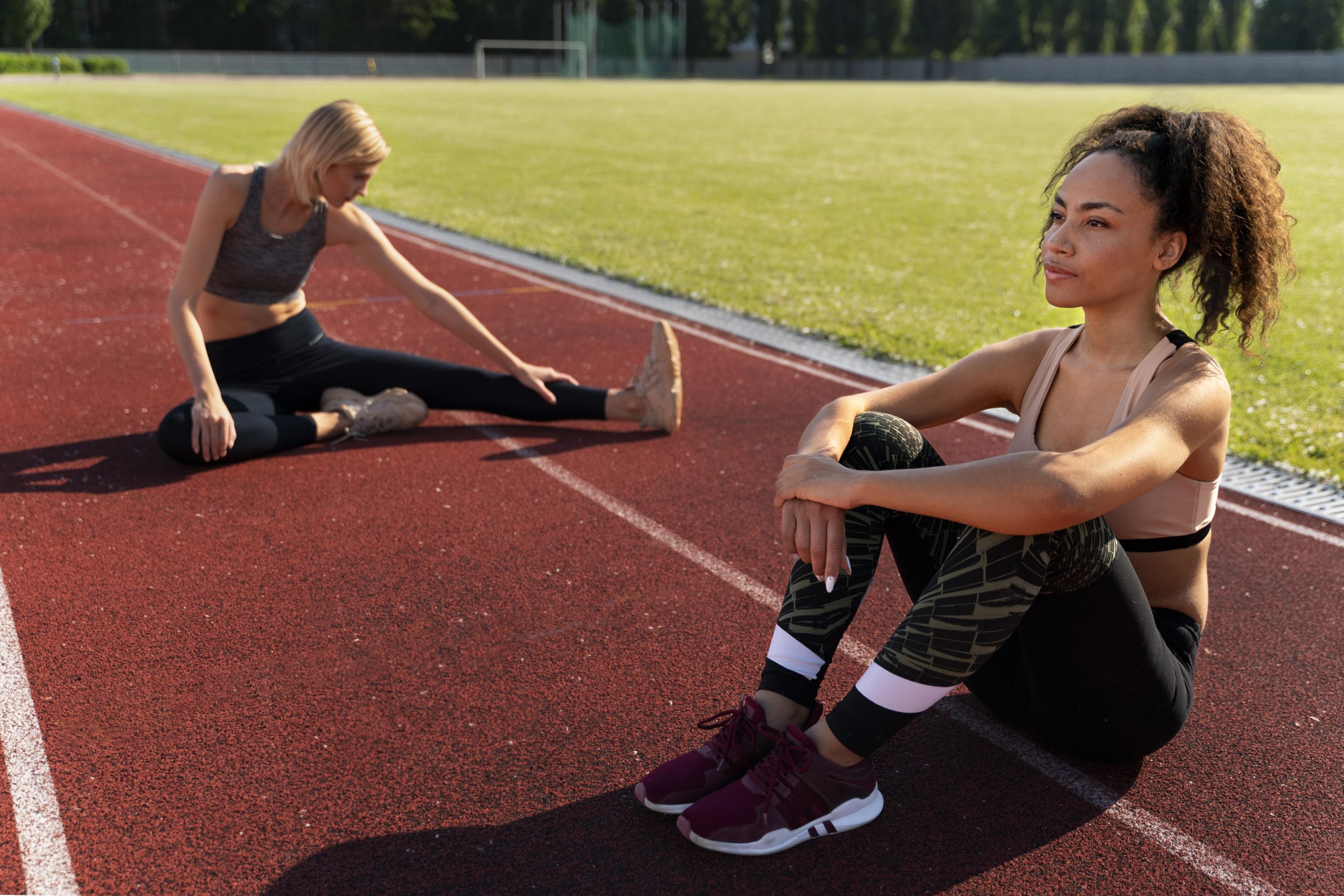
In Lancaster County, the calendar for female athletes is packed. From fall field hockey at Manheim Township to club soccer, track, and volleyball, young women are competing at higher levels and higher intensities than ever before.
While the physical and mental benefits of these sports are undeniable, we are seeing a specific rise in injuries among young female athletes.
At Lancaster Orthopedic Group, we believe that female athletes are not simply "smaller versions" of male athletes. They have unique physiological structures, biomechanics, and nutritional needs. Understanding these differences is the key to keeping them off the sidelines and on the field.

Why the "Female Athlete" Needs a Different Approach
It is well documented in sports medicine that female athletes face higher risks for specific injuries, particularly ACL tears and stress fractures—compared to their male counterparts. Dr. Joy L. Long, MD, our Fellowship Trained Orthopedic Surgeon specializing in Sports Medicine, notes that these risks often stem from a combination of anatomy and mechanics. "As young women grow, changes in hip width affect the 'Q-angle', the angle between the hip and the knee," Dr. Long explains. "This can alter how an athlete lands from a jump or pivots on the field. Without proper neuromuscular training, this places excessive stress on the ACL." Furthermore, hormonal fluctuations and growth spurts during adolescence can temporarily affect ligament strength and coordination, making the body more vulnerable during high-speed play.A Collaborative Approach to Prevention
Effective injury prevention isn't just about what happens in the doctor's office; it’s about what happens in the gym and on the practice field. This is why Lancaster Orthopedic Group advocates for a collaborative approach involving medical experts, coaches, and strength trainers. LOG recently hosted an educational event featuring Dr. Long and local experts Jessica Shellenberger, Head Field Hockey Coach at Manheim Township, and Megan Fessler-McCarthy, a fitness expert from Tread House. The panel provided coaches, athletes, and parents with strategies to help prevent and manage conditions commonly faced by young female athletes. At LOG, we recommend a three-pronged approach to performance and safety:1. Neuromuscular & Strength Training
To counteract the anatomical risks to the knee, female athletes need more than just cardio; they need strength. A targeted training program should focus on:- Glute and Hip Strength: To control the rotation of the femur (thigh bone) and protect the knee.
- Jump-Landing Mechanics: Teaching the body to land softly with knees aligned over toes, rather than collapsing inward.
- Core Stability: A stable core allows for better control of the extremities during cutting and pivoting movements.
2. Managing the "Specialization" Risk
There is immense pressure on athletes in Lancaster to specialize in one sport year-round. However, overuse injuries (such as tendonitis and stress fractures) are the direct result of repetitive trauma without adequate rest. Dr. Long and our sports medicine team encourage "active rest" or playing multiple sports to cross-train different muscle groups. If an athlete is playing on a school team and a club team simultaneously, communication between coaches, parents, and medical providers is vital to manage the cumulative load on the athlete's body.3. Fueling for Bone Health
A critical, often overlooked factor is nutrition. The "Female Athlete Triad" (now often referred to as RED-S) involves an imbalance of energy availability, menstrual function, and bone health. Young athletes who under-fuel relative to their energy expenditure are at a significantly higher risk for stress fractures and long-term bone density issues.When to See a Specialist
Pain should not be accepted as a "normal" part of the season. If your daughter or athlete is experiencing:- Knee instability or "giving way"
- Pain that persists after rest
- Swelling after activity
- A decline in performance due to discomfort
Expert Care at Lancaster Orthopedic Group
Whether your goal is returning to the field after an injury or optimizing performance to prevent one, our team is here to help. Dr. Joy L. Long and our team of sports medicine physicians understand the specific demands placed on female athletes. We offer comprehensive evaluations that look at the whole athlete - biomechanics, training load, and physiology, to build a recovery plan that lasts. Meet Our Physicians and Schedule a ConsultationHave questions as you prepare for your joint replacement surgery? Call our office

Speak to a Specialist
717.560.4200