


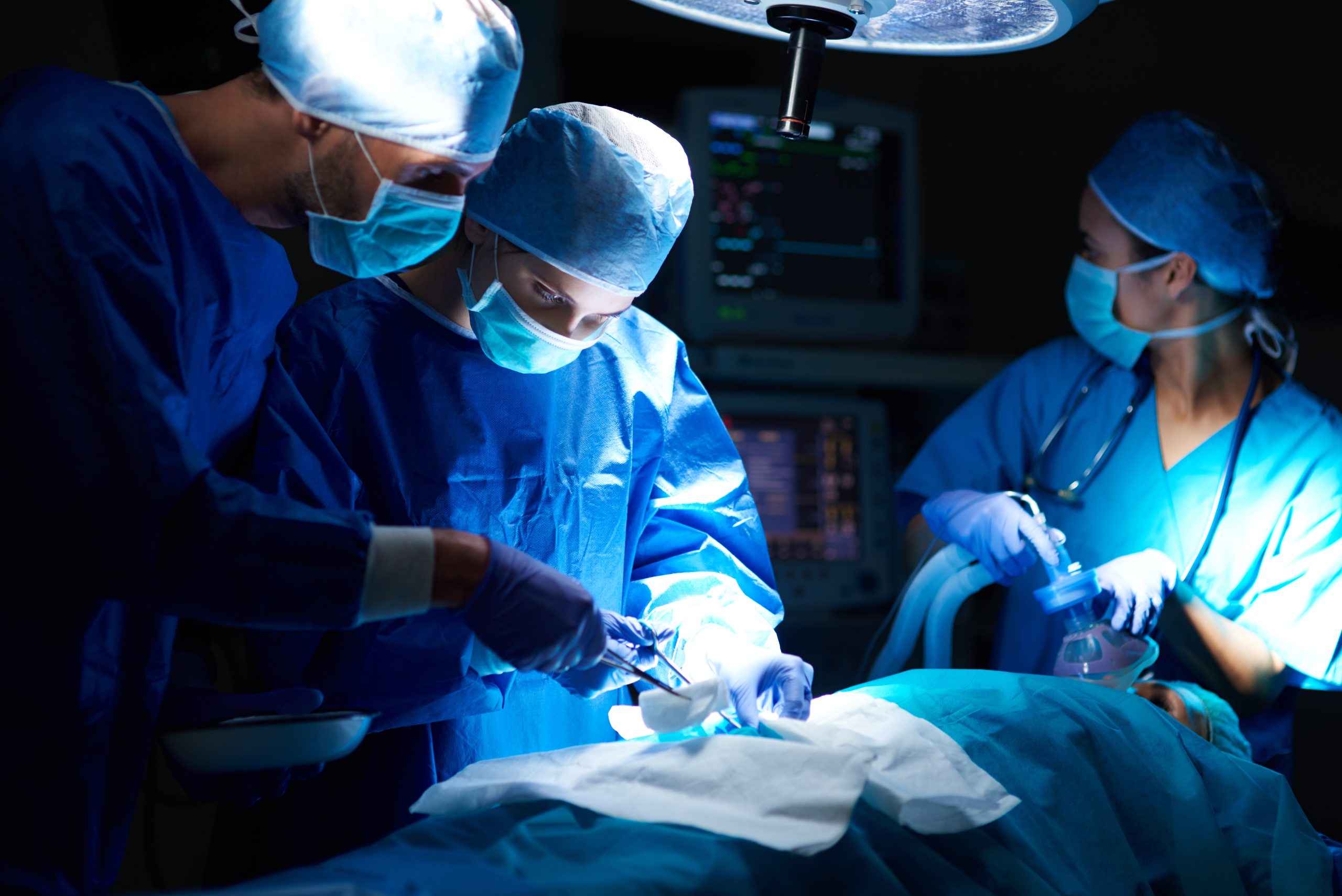
For medical review by the Spine Team at Lancaster Orthopedic Group.
The phrase “minimally invasive” can sound as though spine surgery has become a small or simple procedure. The more accurate meaning is that the surgeon reaches the problem through a smaller, more muscle-sparing path while still performing the work needed to relieve pressure on nerves, stabilize the spine, or correct a specific structural problem.
For the right patient, that approach may mean less disruption to surrounding tissue and a more manageable early recovery. It does not make every spine condition surgical, eliminate risk, or guarantee that the smallest incision is the best operation. The first question is always whether surgery is likely to help at all.

What Does “Minimally Invasive Spine Surgery” Actually Mean?
Minimally invasive spine surgery, often shortened to MISS or MIS, is not one procedure. It is a group of techniques that use smaller incisions, specialized instruments, and focused visualization to reach the spine without exposing as much muscle and soft tissue as a traditional open approach. A surgeon may use tubular retractors that gently create a working corridor, a microscope or endoscope for magnified visualization, and image guidance or surgical navigation to confirm the location and path of instruments. The approach is selected to accomplish a specific goal - not simply to make the incision smaller.Smaller Incision Does Not Mean Smaller Decision
Back and neck pain are common, but only a portion of patients have a problem that surgery can reliably improve. Imaging must match the symptoms and examination. A disc abnormality on an MRI is not enough by itself, because many age-related changes are present in people who have little or no pain. Before surgery is recommended, the spine team considers the diagnosis, symptom pattern, neurologic findings, response to non-surgical treatment, overall health, and the function you are trying to regain. In some situations, an open approach may be safer or more effective than a minimally invasive one. The right operation matters more than the label.Conditions That May Be Treated With a Minimally Invasive Approach
Depending on the location, severity, stability of the spine, and the surgeon’s assessment, minimally invasive techniques may be considered for conditions such as:- A herniated disc that is compressing a nerve and causing persistent arm or leg symptoms.
- Lumbar spinal stenosis that limits standing or walking because nerves are crowded.
- Spondylolisthesis or another form of spinal instability.
- Degenerative disc disease in carefully selected patients.
- Certain spinal deformities, compression fractures, infections, or tumors.
Common Minimally Invasive Spine Procedures
Discectomy or microdiscectomy
When part of a herniated disc presses on a nerve, the surgeon may remove the offending disc material through a small working corridor. The goal is to relieve the nerve pressure that is producing arm or leg pain, numbness, or weakness.Spinal decompression
Spinal stenosis can narrow the space available for nerves. A minimally invasive decompression may remove selected bone or soft tissue through a tubular retractor. Laminectomy and foraminotomy are examples of procedures that can create more room around compressed nerves.Minimally invasive stabilization or fusion
If painful motion or instability is part of the problem, screws, rods, a spacer, and bone graft may sometimes be placed through smaller incisions with image guidance or navigation. Fusion is not required for every minimally invasive procedure; it is used when stability is a necessary part of the surgical goal.Motion-preserving and other targeted procedures
In selected cases, options such as artificial disc replacement, cervical laminoplasty, laminotomy, or kyphoplasty may address the problem while preserving motion or limiting the amount of tissue disrupted. Whether any of these options fits depends on the exact diagnosis and anatomy.How the Muscle-Sparing Approach Works
The spinal bones, discs, and nerves sit beneath layers of muscle. Traditional open surgery may require a wider exposure so the surgeon can see and reach the area. In a minimally invasive approach, the surgeon may progressively dilate a path through the soft tissue and hold that corridor open with a tube. A microscope, endoscope, fluoroscopy, navigation system, or other imaging technology helps the surgeon work through the smaller opening. After the instruments and retractor are removed, the displaced tissues can settle back into place. The size and number of incisions still vary with the procedure.Potential Benefits - Not Guarantees
By limiting disruption to muscle and other soft tissue, minimally invasive approaches may offer several early-recovery advantages for appropriately selected patients:- Smaller skin incisions and less visible scarring.
- Less blood loss during some procedures.
- Less muscle injury and postoperative pain.
- A shorter hospital stay or an outpatient option for some operations.
- A faster return to walking, daily activity, or rehabilitation for some patients.
What Minimally Invasive Surgery Does Not Promise
A small incision cannot compensate for the wrong diagnosis. It also does not guarantee an outpatient procedure, prevent every complication, eliminate the need for rehabilitation, or ensure that all back or neck pain will disappear. The main goal is usually specific: relieve pressure on a nerve, stabilize an unstable segment, correct a structural problem, or preserve function. Ask the surgeon which symptom the operation is most likely to improve. Leg or arm pain caused by nerve compression may respond differently than generalized back or neck aching.Risks and Limitations Still Matter
Every spine operation carries risk, even when the access route is smaller. Possible concerns include infection, bleeding, anesthesia complications, blood clots, spinal fluid leak, nerve injury, persistent symptoms, failure of a fusion to heal, or the need for another procedure. The exact risks depend on the operation and your health. Occasionally, a minimally invasive procedure cannot be completed as planned and the surgeon may need to convert to a wider open approach. That possibility should be discussed before surgery along with the expected benefit, alternatives, and what happens if you continue non-surgical care.Who May Be a Candidate?
A potential candidate usually has a clearly identified structural problem that matches the symptoms, meaningful limitations despite appropriate non-surgical care, and a surgical objective that can be completed safely through a minimally invasive corridor. Some deformities, multi-level problems, prior operations, severe instability, or unusual anatomy may require an open or combined approach. Medical conditions, bone quality, nicotine use, weight, medications, and the ability to follow recovery restrictions can also affect the recommendation.What Happens at a Spine Surgery Consultation?
The surgeon reviews the history, neurologic examination, imaging, treatments already attempted, and the activities you want to regain. A useful visit should explain the diagnosis in plain language and connect each proposed step to a symptom or functional goal. At Lancaster Orthopedic Group, orthopedic spine surgeons Dr. Christopher Cook and Dr. Michael St. Onge evaluate surgical and non-surgical options as part of the coordinated Spine Program. Dr. Cook performs procedures including artificial disc replacement, motion-preserving decompression, and navigation-guided spine surgery. Dr. St. Onge specializes in minimally invasive procedures, motion-preserving techniques, kyphoplasty, decompression, fusion, disc replacement, and other complex spine care.Three Questions to Ask the Surgeon
What exact problem will the operation treat?
Ask the surgeon to show you where the nerve is compressed, where the spine is unstable, or what structure needs correction. Then ask which of your symptoms should improve if the operation succeeds.Why is this approach better for me than continued non-surgical care or an open procedure?
The comparison should include expected benefit, recovery, risk, and the consequences of waiting. “Minimally invasive” is meaningful only if it safely accomplishes the surgical goal.What will recovery require at home?
Clarify whether the procedure is outpatient or inpatient, when walking begins, what lifting or driving restrictions apply, when therapy may start, and who to contact if symptoms change after surgery.What Does Recovery Look Like?
Many patients are encouraged to stand and walk soon after surgery, but the pace of recovery depends on the procedure. A limited decompression and a multi-level fusion are both sometimes described as minimally invasive, yet their restrictions and healing timelines are very different. Early recovery may focus on wound care, walking, pain control, and avoiding movements that place too much stress on the surgical area. Return to driving, desk work, physical work, exercise, and therapy should follow the individualized instructions from the surgical team. Improvement in nerve symptoms can also continue over time rather than happening all at once.Planning Spine Surgery Close to Home in Lancaster County
Spine surgery involves more than the day of the operation. Imaging, preoperative preparation, anesthesia planning, follow-up, therapy, and quick access to the care team all shape the experience. Lancaster Orthopedic Group’s Spine Program coordinates non-surgical care, advanced imaging, pain management, surgical evaluation, and postoperative support for Lancaster County and surrounding Pennsylvania communities. For patients considering minimally invasive spine surgery in PA, that coordination can make the decision and recovery easier to navigate. The goal is a plan that fits the diagnosis and your life - whether the next step is therapy, an injection, more time, or surgery.Frequently Asked Questions
Is minimally invasive spine surgery “laser spine surgery”?
Usually not. Lasers are rarely the central tool in minimally invasive spine procedures. Surgeons more commonly use tubular retractors, microscopes or endoscopes, and image guidance or navigation.Is minimally invasive spine surgery always outpatient?
No. Some procedures can be performed in an outpatient setting, while others require a hospital stay. The setting depends on the operation, your health, anesthesia needs, and the support available after discharge.Will a minimally invasive approach help me avoid fusion?
Not necessarily. Some decompression or disc procedures do not require fusion. When instability is part of the problem, fusion may still be necessary and can sometimes be performed through a minimally invasive approach.Does a smaller incision make the operation risk-free?
No. Smaller access may reduce some tissue-related effects, but risks involving nerves, infection, bleeding, anesthesia, healing, and persistent symptoms remain. Your surgeon should explain the risks specific to the proposed procedure.Can I get a second opinion before spine surgery?
Yes. Spine surgery is an important decision. A second opinion can help confirm the diagnosis, compare approaches, and make sure the expected benefit is clear before you proceed.Wrapping Up
Minimally invasive spine surgery is best understood as a way of reaching and treating a spinal problem with less disruption to surrounding tissue. Its value depends on selecting the right patient, the right operation, and the safest approach - not simply choosing the smallest incision. A spine consultation can help you determine whether surgery is likely to help, whether a minimally invasive technique fits your condition, and what recovery would realistically require. Call 717-560-4200 or request an appointment online to get started.Have questions as you prepare for your joint replacement surgery? Call our office

Speak to a Specialist
717.560.4200